
Alan Rose - Author, Host of WordFest and BookChat
  • Home
  • Published Work
    • Other Writings
    • As if Death Summoned
      • Trailer
      • Prologue and Chapter 1
      • Book Reviews
      • January 2021 WordFest Interview
      • Media Kit
      • Media Release
    • The Unforgiven
      • Trailer
      • Synopsis
      • Excerpts
      • Discussion Guide
    • Tales of Tokyo
      • Trailer
      • Synopsis
      • Excerpts
      • Bookchat Interview
      • Interview
      • Reviews
      • Prologue Reading
      • Discussion Guide
    • The Legacy of Emily Hargraves
      • Trailer
      • Synopsis
      • Excerpts
      • Reviews
      • Interview
    • The Island (to be published)
      • Author's Introduction
      • Prologue
      • Chapter 1
      • Chapter 2
      • Chapter 3
  • WordFest
  • Book Chat
  • Book Reviews
  • Note Cards
  • Reflections
    • Foxglove Moments
    • Memories Out of Season
    • A Writer's Journal
    • A Northman's Reveries
  • Email Alan
  • Newsletter

Book Reviews

The Crying Tree

Naseem Rakha

Broadway Books/Random House
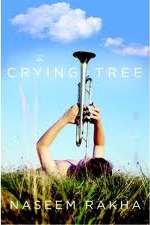
[Daniel asks] “You ever done that? Forgiven someone even though they don’t deserve it?” …

“No,” Mason said. “No, I’ve never done that.”

“Well, I got to say, it fills you. Whether you want it to or not, that kind of thing, it just fills you. It’s like pain and grace all tied up in one.”

                                        from The Crying Tree


The Crying Tree reflects pain and grace intermingled

Could you forgive the person who killed your child? Would you even want to?

That is the question that Naseem Rakha initially poses in her novel, The Crying Tree. But as the story develops, the question of forgiveness becomes more complicated.

In 1985, Irene and Nate Stanley, recent transplants from Illinois, have a normal family life in eastern Oregon with their two children, thirteen-year old Bliss and fifteen-year old Shep. And then one afternoon Shep is killed in the course of an apparent home robbery.

His murderer is Daniel Robbin, a nineteen-year old who has a troubled past of foster homes and run-ins with the law.

Such tragedies uncover a family’s fault lines, where they are likely to fracture, and we watch the family come apart. Irene sinks into a paralyzing depression for years; she and Nate now simply inhabit a marriage; Bliss grows up on her own, her parents too traumatized by their loss to give her the emotional support she needs. The life they knew has been shattered forever and Irene’s one desire is to see Daniel Robbin executed.

Nineteen years pass and her wish is finally granted. Robbin will no longer appeal his death sentence. But by this time Irene has moved on, if not from her grief, from her need for revenge and Daniel Robbin’s life.

As the execution date approaches, some nagging questions begin to crystallize in the reader’s mind—Why did Nate so abruptly uproot his family from their farm in Illinois to eastern Oregon? What was the tension between father and son? Most unsettling, how do we square the brutal murderer of Shep with the gentle, reflective and remorseful man now in prison?

We get to know Robbin through the eyes of Tab Mason, the penitentiary superintendent and the one responsible for overseeing the execution. As we read on, we sense that something doesn’t ring true.

The book is about forgiveness and redemption, yes, but it’s also about families and the secrets family members keep from each other. As the full story unfolds of what happened the day Shep died, the initial question of forgiveness becomes much broader: Can we finally forgive each other? Can we finally forgive ourselves?

Shakespeare reminds us that mercy is “twice bless’d; It blesseth him that gives and him that takes”—which doesn’t mean that it can’t be painful, to give and to receive mercy.


This review first appeared in The Columbia River Reader (September 15-October 14, 2010). Reprinted with permission.

The Elegance of the Hedgehog

 
Muriel Barbery
Translated from the French by Alison Anderson

Europa Editions


In our world, that’s the way you live your grown-up life: you must constantly rebuild your identity as an adult, the way it’s been put together it is wobbly, ephemeral, and fragile, it cloaks despair and, when you’re alone in front of the mirror, it tells you the lies you need to believe … I find this a fascinating phenomenon: the ability we have to manipulate ourselves so that the foundation of our beliefs is never shaken.

                from The Elegance of the Hedgehog


Contemplative page-turner captures the joy of finding a kindred spirit

This is an unlikely candidate for an international bestseller: not much of a plot, little action, and the two main characters are hardly the stuff of great literary heroines—

Madame Michel, a cheerless concierge, by her own description, fat, ugly and fifty-four, and Paloma, a precocious twelve year-old, “ripe for despair," planning her suicide.

Living in the same building, both are hiding who they really are: Paloma dumbs down to her peers’ level, while Madame Michel plays the television loudly so people think she is mindlessly ensconced on her couch, while actually immersing herself in the delights of art that moves one to tears.

The life of the mind, for all its riches, is inherently a lonely life. Reading this, I was reminded of Emily Dickinson’s poem that begins:

I’m nobody. Who are you?
Are you nobody too?
Then there’s a pair of us.
Don’t tell—they’d banish us, you know.

A mordantly humorous satire, the book moves between the musings of a very bright, very observant pre-teen, offering her “profound thought for the day” (“We mustn’t forget … that a lifespan is pathetically short, one day you’re twenty and the next day you’re eighty”) and the reclusive concierge’s reveries (“We cannot cease desiring, and this is our glory, and our doom. Desire! It carries us and crucifies us …”) Both are highly attuned to the human comedy as we make “our laughable way through life.”

Then, into their lives comes Monsieur Ozu, a refined Japanese gentleman who not only mirrors elegance, but in a way, bestows it. Madame Michel reflects: “This morning … I was surprised to discover that I am not who I thought I was.”

I have a theory as to why this book is so popular: I think it speaks of a particular kind of outsider, the pretender wearing his or her banal camouflage, trying to blend in; and testifies to the power of art—whether literature, painting, film, or music—to resurrect, re-invent, and rescue one from the insanity and absurdity of the everyday workaday world.

Not a compulsive page-turner like those other titles on the bestselling list, with their pierced, tattooed hacker heroines, or vampire boyfriends, Hedgehog is more a contemplative page-turner, capturing the loneliness of the long distance thinker, and that sublime joy—deeper than love—when one discovers a kindred spirit (Then there’s a pair of us), and for a moment one is no longer alone.


This review first appeared in The Columbia River Reader (July 15-August 14, 2010). Reprinted with permission.
 

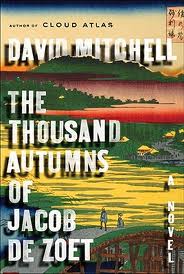
The Thousand Autumns of Jacob de Zoet

David Mitchell

Random House


On Marinus’s desk is a folio volume: Osteographia by William Cheselden.

Jacob contemplates the details [of the skeleton], and the devil plants a seed.

What if this engine of bones—the seed germinates—is a man’s entirety …

“Doctor, do you believe in the soul’s existence?”

Marinus prepares, the clerk expects, an erudite and arcane reply. “Yes.”

“Then where”—Jacob indicates the pious, profane skeleton—“is it?”

“The soul is a verb.” He impales a lit candle on a spike. “Not a noun.”

   from The Thousand Autumns of Jacob de Zoet


Historical novel offers gripping, fascinating "travel guide" to Japan and the past.


“The past is a foreign country,” L. P. Hartley famously noted. “They do things differently there.”

Too often historical novels are simply modern stories dressed up in period costumes; the best historical fiction becomes a travel guidebook to that foreign country of the past.

In David Mitchell’s The Thousand Autumns of Jacob de Zoet, we are transported to Japan in 1799, where for over two hundred years, the Japanese have successfully sealed off the country from the contagion of Western religion and ideas. The one point of contact with the outside world is Dejima, a man-made island in Nagasaki Bay, where employees of the Dutch East Indies Company are confined to conduct their trade.

The book opens with a harrowing scene, immediately grabbing the reader. But then it lapses into a long stretch of scene setting, and introduces a bewildering array of Japanese and Dutch characters, most with unpronounceable names (Uzaemon, Ouwehand, Aibagawa, Gerritszoon) which may understandably cause the reader to lay the book aside. And that would be a shame, for this is a gripping and beautifully written work. 

The story is told mainly through three characters: Jacob de Zoet, a young, honest clerk, sent to audit the records for suspected embezzlement—To the Dutch inhabitants of Dejima, embezzlement isn’t so much a crime as a way of life, which he now threatens.

Orito Aibagawa, a midwife and the daughter of a respected doctor, is disfigured.

Jacob falls in love with her “beautiful, burned face,” as does Uzaemon Ogawa, an interpreter to the Dutch who has imbibed forbidden Western ideas.

Orito is sold to the powerful Abbott Lord Enomoto, who collects deformed and otherwise unmarriageable young women for his monastery, about which terrible rumors circulate (Depravity Alert.) Uzaemon sets out to rescue Orito from this “nunnery of freaks,” and the story ratchets up from there.

In addition to a compelling story, Mitchell steeps us in the past: how people related, how they understood the world, the arcane lore of their medicine—Want to know how they removed kidney stones in the eighteenth century? (Trust me, you don’t.) 

The author of Cloud Atlas and Ghostwritten, Mitchell has twice been shortlisted for the prestigious Booker Man Prize. In Thousand Autumns, he has written a fascinating travel guide to two foreign countries: Japan and the past—where, in both, they do things differently.


This review first appeared in The Columbia River Reader (August 15-September 14, 2010). Reprinted with permission.


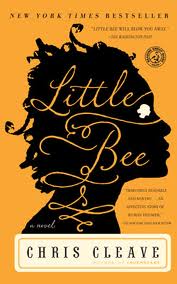
Little Bee

 Chris Cleave

Simon & Schuster

“I ask you right here please to agree with me that a scar is never ugly. That is what the scar makers want us to think. But you and I, we must make an agreement to defy them. We must see all scars as beauty. Okay? This will be our secret. Because take it from me, a scar does not form on the dying. A scar means, I survived.”

                                              from Little Bee


Powerful, wrenching fiction takes no prisoners


“The men came and they…That was how all of our stories started.”

There are books almost too painful to read. Little Bee pulls no punches. Powerful and wrenching, it is for people who can take their literature—and life—raw; this is fiction that takes no prisoners.

Chris Cleave, a journalist for The Guardian, has been compared to fellow British author Ian McEwan (Solar, Atonement, Amsterdam), so we should not expect some uplifting, heartwarming tale of the triumph of the human spirit. Both writers are more attuned to the deeper registers of human pathos.

Shortlisted for the Costa Award for Best Novel of 2008, this is a gripping story of two women—Little Bee, a sixteen-year old Nigerian girl, and Sarah, editor of a chic London magazine—whose lives come together on an isolated African beach and are bound forever by a single act of horror. The media would report it as one of those “crimes against humanity”—such a bland, innocuous term for acts of unspeakable violence, usually committed against women and young girls.

The incident may be set in Nigeria, but it could just as easily be Darfur, or Kosovo, or Iraq. Geography changes; the atrocities and the suffering are sadly universal. 

Little Bee becomes a refugee, escaping to England where she stays in a detention center for two years, before seeking out Sarah and her husband, Andrew (“When I say that I am a refugee, you must understand that there is no refuge”—The girl cannot escape from what she has witnessed; neither can Sarah.)

The book is often emotionally difficult to read and almost impossible to put down. A page-turner, it keeps drawing the reader to that African coast where we don’t want to go, but must.

For me, the only false step was when the story lapsed into details of Sarah’s previous adultery. Following the terror of what happened, her affair seemed somehow tawdry, the stuff of TV soaps: Will Sarah ever find true happiness with Lawrence? (Will Little Bee ever be able to live with the brutal rape and dismemberment of her sister?)

Sarah tells her, “We’ve got to get a grip. We can’t let ourselves be the people things happen to.” We, like them, want to hold out the hope for healing, knowing that, if it happens, it will be a partial healing.

Sometimes the “triumph” of the human spirit comes in a small, battered whisper: “We survived.”


This review first appeared in The Columbia River Reader (May 15-June 14, 2010). Reprinted with permission.
 

Another Way the River Has: Taut True Tales from the Northwest

Robin Cody

Oregon State University Press

 A kingfisher hovers in mid-air over the water, makes an arrow of himself and dives—plunk—spearing a fingerling and splash-flapping to a low limb. He points his beak skyward and swallows the fish in one neck-stretching gulp, then takes a couple of small bows, as if to say There, that’s how it’s done.

                          from Another Way the River Has


Elegant, vernacular prose captures Northwest spirit


Reading this book you get the impression that Robin Cody is one of those rare individuals who actually stops and smells the roses—or watches river otters; a man who observes, and reflects thoughtfully on what he observes.

His book reminded me of Norman Maclean’s A River Runs Through It, or Edward Abbey’s Desert Solitaire, or, even closer to home, South of Seattle, Jim LeMonds’ memories of growing up in the northwest woods around Castle Rock.

One senses in Cody a kindred spirit to Thoreau sitting out on Walden Pond, while the rest of us are living our “lives of quiet desperation.”

The author of Voyage of a Summer Sun, which received an Oregon Book Award, Cody has been an English teacher, a college dean, and a school bus driver. 

He is a storyteller of things that he loves—rivers, and creatures of the rivers, and the special needs kids he drives to school each day.

In prose that is at once both vernacular and elegant, he covers a range of subjects dear to his northwest heart: from loggers’ lore to the Pendleton Round Up and the cowboys who travel the rodeo circuit (“eight second athletes,” he calls them—the amount of time required to stay on a bronco who is royally pissed off); exploring the rivers in his boat, The Turtle; and driving a “short school bus” while telling his favorite special kid stories with a unique twist: “Snow White and the Three Bears” or “Snow White and the Beanstalk.”

A true northwesterner, he has a healthy disrespect for the U.S. Forest Service and for all government bureaucracies (“It’s got so a man can’t pee in the woods anymore without filing an Environmental Impact Statement”) while also aware of the short-sighted impulse of making the fast buck at the expense of wilderness (“We could lose what is unique about this place. We could submit to the great Western theme of destroying what we love most.”) His take on evolution is simple and eloquent: “Organisms, over time, inherit the stuff that works.”

He describes a friend who was killed in the woods when his Cat rolled over and crushed him as possessing “the serenity of a man who knows who he is.”

My hunch is that this could describe Robin Cody as well.


This review first appeared in The Columbia River Reader (April 15-May 14, 2010). Reprinted with permission.


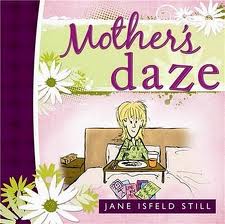
Mother's Daze


Jane Isfeld Still

Cedar Fort Inc.

Local woman pens book on funny side of motherhood


Last March, as Jane Still prepared to read her humor essay at WordFest, she was apprehensive. Would the subject (breastfeeding) be appropriate? Would the men find this an opportune moment to go check the parking meter? Most importantly, would people laugh?

She needn’t have worried. People laughed as she began reading and they continued laughing to the end. The enthusiastic response gave her the confidence to send off her collection of essays about motherhood to several publishers.

One year later: At the May WordFest, Jane will be launching her book, Mother’s Daze, published by Cedar Fort Inc. You don’t need to be a mother to enjoy the book; to have had a mother is probably sufficient.

Taking a course in childhood development, she and her husband Rick decided they were now ready to become parents (“In my pre-baby days I was an authority on everything I knew nothing about.”) In short witty chapters, she describes her experiences: on being pregnant (“I was the size of a small apartment building and hadn’t seen my feet for weeks.”); on choosing a name that her son will have to live with for the rest of his life (“How can you sleep at a time like this?” she shouts at her husband. “Don’t you realize we need to name little Anonymous?”); on the subtle transformation that was taking place within her (“Motherhood had changed me. Most women became nurturing and unselfish. For me, it brought out my criminal tendencies.”)

Jane’s humor is that kind that makes one laugh while at the same time deepens one’s understanding. With a candor that is both funny and poignant, she shares the paradox of emotions we all experience (“Rick didn’t bring me any flowers. Just because we were on a student budget and I said I’d be mad if he spent money on flowers was no reason not to bring me some.”)

 As she enters motherhood, Jane realizes, like many before her, that being a parent is going to be a journey for which there are no reliable maps (“I want my money back from that stupid child development class.”)

This book is the perfect Mother’s Day gift—to give to one’s children and husband, perhaps with a note attached: “And this is my side of the story.” It will make them laugh—and maybe help them understand.


This review first appeared in The Columbia River Reader (March 15-April 14, 2010). Reprinted with permission.


Page 18 of 18

  • 9
  • 10
  • 11
  • 12
  • 13
  • 14
  • 15
  • 16
  • 17
  • 18

More:

  • 1000 Books to Read Before You Die
  • A Burning
  • A Little Life
  • A Shrug of the Shoulders
  • A Sudden Light
  • A Tale for the Time Being
  • A Visit from the Goon Squad
  • A Woman of No Importance: The Untold Story of the American Spy Who Helped Win World War II
  • A World Appears: A Journey into Consciousness
  • All the Light We Cannot See
  • An Immense World: How Animal Senses Reveal the Hidden Realms Around Us
  • Another Way the River Has: Taut True Tales from the Northwest
  • Anything Is Possible
  • Aristotle and Dante Discover the Secrets of the Universe
  • Astoria: John Jacob Astor and Thomas Jefferson's Lost Pacific Empire
  • Astrophysics for People in a Hurry
  • At the Existentialist Café: Freedom, Being, and Apricot Cocktails
  • Autobiography of Mark Twain
  • Behind the Beautiful Forevers: Life, Death and Hope in a Mumbai Undercity.
  • Between the World and Me
  • Big Jim and the White Boy
  • Big Magic: Creative Living Beyond Fear
  • Black Flags: The Rise of ISIS
  • Black Hills
  • Black Leopard, Red Wolf
  • Blurb Your Enthusiasm: An A-Z of Literary Persuasion
  • Call Me By Your Name
  • Capital in The Twenty-First Century
  • Cascadia's Fault: The Coming Earthquake and Tsunami That Could Devastate North America
  • Circe
  • City of Weird: 30 Other- worldly Portland Tales
  • Cloud Atlas
  • Cloud Cuckoo Land
  • Cosmic Connections: Poetry in the Age of Disenchantment
  • Dead Wake: The Last Crossing of the Lusitania
  • Deep Fire Rise
  • Deep River
  • Demon Copperhead
  • Don't Skip Out on Me
  • Dreyer’s English: An Utterly Correct Guide to Clarity and Style
  • Empire of Trees: America's Planned City and the Last Frontier
  • Everything That Rises: A Climate Change Memoir
  • Ex-Libris: 100+ Books to Read and Reread
  • Exhalation
  • Extremely Loud and Incredibly Close
  • Factfulness: Ten Reasons We’re Wrong About the World—and Why Things Are Better Than You Think
  • Fear Less: Poetry in Perilous Times 
  • Founding Partisans: Hamilton, Madison, Jefferson, Adams and the Brawling Birth of American Politics
  • Galway Kinnell Collected Poems
  • Gender Queer/Beyond Magenta
  • Gods of the Upper Air: How a Circle of Renegade Anthropologists Reinvented Race, Sex and Gender in the Twentieth Century.
  • Gone Girl
  • Hamnet
  • Hawking
  • His Bloody Project: Documents relating to the case of Roderick Macrae
  • Homo Deus: A Brief History of Tomorrow
  • Horizon
  • Hotel on the Corner of Bitter and Sweet
  • Huck Finn's America: Mark Twain and the Era that Shaped His Masterpiece
  • Humankind: A Hopeful History
  • I Am Not I
  • I See You've Called in Dead
  • Imminent: Inside the Pentagon’s Hunt for UFOs
  • In the Garden of Beasts
  • In the Houses of Their Dead: The Lincolns, the Booths, and the Spirits
  • James
  • JFK: Coming of Age in the American Century, 1917-1956
  • Killers of the Flower Moon: The Osage Murders and the Birth of the FBI
  • Landfall
  • Lean on Pete
  • Lessons
  • Lexicon
  • Life After Life
  • Life of Pi
  • Lincoln in the Bardo
  • Little Bee
  • Lost for Words
  • Mariposa Road
  • Mexican Gothic
  • Mink River
  • Mother's Daze
  • Murder and Scandal in Prohibition Portland
  • My Ex-Life
  • My Friends
  • No Ordinary Joes: The Extraordinary True Story of Four Submariners in War and Love and Life
  • No Time to Spare: Thinking About What Matters
  • On the Edge of Survival: A Shipwreck, a Raging Storm, and the Harrowing Alaskan Rescue that Became a Legend
  • One Long River of Song: Notes on Wonder
  • Orphan Train
  • Playground
  • Poetry Unbound: 50 Poems to Open Your World
  • Poverty, By America
  • Quiet: The Power of Introverts in a World That Can’t Stop Talking
  • Remarkably Bright Creatures
  • Revisiting (and renewing) the classics
  • Revisiting the Classics, Pt. 2: The Books We Love
  • River of the Gods: Genius, Courage, and Betrayal in the Search for the Source of the Nile
  • Short Nights of the Shadow Catcher: The Epic Life and Immortal Photographs of Edward Curtis
  • Sing, Unburied, Sing
  • Stamped From the Beginning
  • State of Wonder
  • Stones into Schools
  • Sun House
  • Ten Windows: How Great Poems Transform the World
  • The Age of Miracles
  • The Art of Memoir
  • The Bad Muslim Discount
  • The Bartender's Tale
  • The Better Angels of Our Nature: Why Violence Has Declined
  • The Boys in the Boat: Nine Americans and Their Epic Quest for Gold at the 1936 Berlin Olympics
  • The Bright Sword: A Novel of King Arthur
  • The Crying Tree
  • The Dawn of Everything: A New History of Humanity
  • The Elegance of the Hedgehog
  • The Emperor of Gladness
  • The End of Your Life Book Club
  • The Fate of the Day: The War for America, Fort Ticonderoga to Charleston, 1777-1780
  • The Fear Index
  • The Female Persuasion
  • The First Conspiracy: The Secret Plot to Kill George Washington
  • The God of the Woods
  • The Gods of Gotham
  • The Good Lord Bird
  • The Great Believers
  • The House in the Cerulean Sea
  • The Keeper of Lost Causes
  • The Lifeboat
  • The Light Between Oceans
  • The Little Red Chairs
  • The Map of Time
  • The Midnight Library
  • The Ministry for the Future
  • The Ministry of Time
  • The Narrow Road to the Deep North
  • The Nickel Boys
  • The Novel of the Century
  • The Oxford Illustrated History of the Book
  • The Reformatory
  • The Rejected Writers’ Book Club
  • The Republic for Which It Stands: The United States During Reconstruction and the Gilded Age, 1865-1896
  • The Rosie Project
  • The Round House
  • The Second Mountain: The Quest for a Moral Life
  • The Secret History of Bigfoot: Field Notes on a North American Monster
  • The Secret Place
  • The Sellout
  • The Seven Moons of Maali Almeida
  • The Sixth Extinction
  • The Socrates Express: In Search of Life Lessons from Dead Philosophers
  • The Splendid and the Vile: A Saga of Churchill, Family, and Defiance During the Blitz
  • The Storied Life of A. J. Fikry
  • The Sweetness of Water
  • The Thousand Autumns of Jacob de Zoet
  • The Trees
  • The Underground Railroad
  • The Unwinding: An Inner History of the New America
  • The Wager: A Tale of Shipwreck, Mutiny and Murder
  • The Wide Wide Sea: Imperial Ambition, First Contact and the Fateful Final Voyage of Captain James Cook
  • The Witches, Salem 1692
  • The Woman’s Hour: The Great Fight to Win the Vote
  • The Work of Art: How Something Comes from Nothing
  • The Writer's Library: The Authors You Love on the Books That Changed Their Lives
  • There, There
  • These Truths: A History of the United States
  • Tibetan Peach Pie: A True Account of an Imaginative Life
  • Time Travel: A History
  • Until We Fall
  • Walkaway
  • We the Animals
  • Where Bigfoot Walks: Crossing the Dark Divide
  • White Trash: The 400-Year Untold History of Class in America
  • Wild: From Lost to Found on the Pacific Crest Trail
  • Wolf Hall
  • Writers and Lovers
  • You Only Call When You’re in Trouble
  • Young Mungo
Subscribe to newsletter
  • About Alan
  • Wordfest
  • Book Chat
  • Book Reviews
  • Contact Info
  • Search alan-rose.com
  • Shop Note Cards
  • Log in
  • Foxglove Moments
  • Memories out of Season
  • A Writer's Journal
  • A Northman's Reveries
  • The Legacy of Emily Hargraves
  • Tales of Tokyo
  • The Unforgiven
  • As If Death Summoned
  • Other published Writings

© 2008 - 2026 ALAN-ROSE.COM                              Website by: LudCom.net       


  • Home
  • Published Work
    • Other Writings
    • As if Death Summoned
      • Trailer
      • Prologue and Chapter 1
      • Book Reviews
      • January 2021 WordFest Interview
      • Media Kit
      • Media Release
    • The Unforgiven
      • Trailer
      • Synopsis
      • Excerpts
      • Discussion Guide
    • Tales of Tokyo
      • Trailer
      • Synopsis
      • Excerpts
      • Bookchat Interview
      • Interview
      • Reviews
      • Prologue Reading
      • Discussion Guide
    • The Legacy of Emily Hargraves
      • Trailer
      • Synopsis
      • Excerpts
      • Reviews
      • Interview
    • The Island (to be published)
      • Author's Introduction
      • Prologue
      • Chapter 1
      • Chapter 2
      • Chapter 3
  • WordFest
  • Book Chat
  • Book Reviews
  • Note Cards
  • Reflections
    • Foxglove Moments
    • Memories Out of Season
    • A Writer's Journal
    • A Northman's Reveries
  • Email Alan
  • Newsletter