Alan Rose - Author, Host of WordFest and BookChat
  • Home
  • Published Work
    • Other Writings
    • As if Death Summoned
      • Trailer
      • Prologue and Chapter 1
      • Book Reviews
      • January 2021 WordFest Interview
      • Media Kit
      • Media Release
    • The Unforgiven
      • Trailer
      • Synopsis
      • Excerpts
      • Discussion Guide
    • Tales of Tokyo
      • Trailer
      • Synopsis
      • Excerpts
      • Bookchat Interview
      • Interview
      • Reviews
      • Prologue Reading
      • Discussion Guide
    • The Legacy of Emily Hargraves
      • Trailer
      • Synopsis
      • Excerpts
      • Reviews
      • Interview
    • The Island (to be published)
      • Author's Introduction
      • Prologue
      • Chapter 1
      • Chapter 2
      • Chapter 3
  • WordFest
  • Book Chat
  • Book Reviews
  • Note Cards
  • Reflections
    • Foxglove Moments
    • Memories Out of Season
    • A Writer's Journal
    • A Northman's Reveries
  • Email Alan
  • Newsletter

Book Reviews

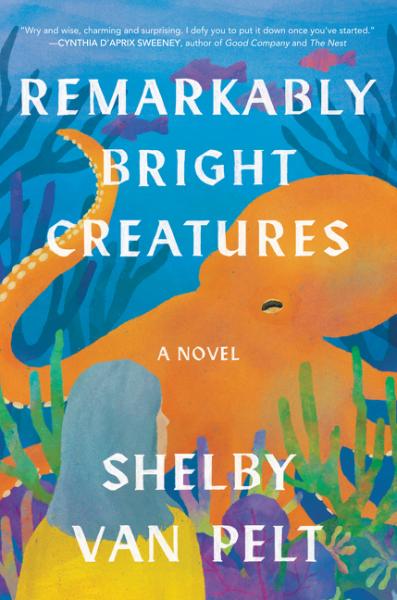
Remarkably Bright Creatures

Bright stories for dark times.

My thought as I finished reading this book was Thanks, I needed that.

First published in 2022, Remarkably Bright Creatures was recently recommended by a friend. It’s a feel-good book like Frank Capra’s classic “It’s a Wonderful Life” is a feel-good movie. They possess many of the same qualities: heartwarming and humorous, life-affirming, celebrating basic human decency against the coarse and corrosive forces that would cheapen and “monetize” life. Both are set in small towns— Capra’s fictional Bedford Falls and the book’s fictional Sowell Bay on Puget Sound—lifting up the importance of community where neighbors know, help, and care for each other.

Both include fantastical elements. Where the film has Clarence, the hapless angel trying to earn his wings, the novel features a Great Pacific Octopus named Marcellus who lives in the local aquarium. A sign on his tank notes that octopuses are “remarkably bright creatures.” Indeed, Marcellus is so intelligent that he has learned how to escape his chamber for a midnight snack on the sea cucumbers in the next tank. He also offers a running commentary on the strange human creatures he observes.

His favorite is Tova Sullivan, a 70-year-old widow who nightly cleans the aquarium. She talks to him, and over time they have developed an inter-species friendship. Marcellus knows of the recent death of Tova’s husband, and the mysterious disappearance of her son Erik thirty years ago.

Joining them is Cameron Cassmore, a young drifter. Abandoned by his addict mother when he was nine, he drifts into Sowell Bay in search of the father he never knew. Their three stories will become entwined through the themes of aging and death, of loss and grief, and of seeking one’s home.

Both book and film suggest how dark times bring out the best and the worst in people. We can despair at the daily dismantling of decency and democratic norms of civility, honesty, and mutual respect. We can feel helpless before the brutish power politics of the unsupervised playground. Yet such stories—about caring for our neighbors, about the bonds of family, familiarity and friendship, about welcoming the stranger in our midst—remind us of the better souls we know we are capable of becoming. They remind us that in even the darkest times, we can be light-bearers.

We are left with Marcellus’ parting words: “Humans. For the most part you are dull and blundering. But occasionally you can be remarkably bright creatures.”

Tova wonders sometimes if it’s better that way, to have one’s tragedies clustered together, to make good use of the existing rawness. Get it over with in one shot. Tova knew there was a bottom to those depths of despair. Once your soul was soaked through with grief, any more simply ran off, overflowed, the way maple syrup on Saturday-morning pancakes always cascaded onto the table whenever Erik was allowed to pour it himself.

from Remarkably Bright Creatures

Shelby Van Pelt
Harper Collins


This review first appeared in The Columbia River Reader (March 15, 2026.) Reprinted with permission.

The Fate of the Day: The War for America, Fort Ticonderoga to Charleston, 1777-1780

Soul-trying times.

These are the times that try men’s souls…

When Thomas Paine wrote those words in December 1776, things were looking pretty bleak for the American colonies in their war with England. The goal of the rebellion had changed since Lexington and Concord (1775), “from a demand to be fully British in rights and privileges, to not being British at all but, rather, a free, independent people.”

This is the second volume of Rick Atkinson’s Revolution Trilogy, following The British Are Coming (2019), covering the years 1777 to 1780. Through his vivid storytelling, Atkinson plunges us into those soul-trying times.

Making extensive use of people’s diaries and letters, he brings a visceral immediacy to events. Periwigged portraits become living, breathing persons with their personal faults and individual genius, their egotism and idealism, their griefs and grudges. Benjamin Franklin is in Paris, playing America’s Artful Dodger and diplomat, patiently charming and scheming to induce the French into allying with the American cause. (The French didn’t necessarily want the Americans to win; they just wanted the British to lose.) His grasp of their language was “ungrammatical if fearless”—“If you Frenchmen would only talk no more than four at a time, I might understand you.”

Among the many colorful characters is Prussian Baron von Steuben. Without knowing a word of English, he shaped the continental soldiers into a disciplined army. Escaping scandal at home, he had requested “compensation only for his expenses and for the loss of his European income, declining to mention that he had none.” There is also the fabulously wealthy 19-year-old Gilbert du Motier, better known to us as the Marquis de Lafayette, inflamed with revolutionary ideals. And towering over them all is George Washington, embodying the classical virtues of integrity, prudence, and dedication to his country, if not exactly brilliant generalship. “In an era of great men, he already was in the front rank.”

Atkinson describes the heroism and courage on both sides, along with unimaginable brutality. Diseases ravaged the troops more than bullets and cannonballs—not surprising since “fewer than 1 percent of musket balls fired in combat typically hit their target.” Desertion remained an ongoing issue, causing Washington to lament, “We shall be obliged to detach one-half of the army to bring back the other.”

In reading history, there is often an Of-course-ness to the past. History as foregone conclusion, history as fate. But Atkinson captures the precariousness and uncertainty of that time, how close the colonies come to losing the war. History before it was written.

Along with his many fans, I eagerly await Atkinson’s third and final volume to see how it’s all going to end.

When frustrated or irate “(General von Steuben) began to swear in German, then in French, and then in both languages together,” his secretary, Peter Du Ponceau, reported. If that failed to bring results, he would tell Du Ponceau, “Come and swear for me in English” […] Americans, he soon recognized, were unaccustomed to blind obedience. To a Prussian friend he wrote, “You say to your soldier, ‘Do this,’ and he does it. But I am obliged to say, ‘This is the reason why you ought to do that.’ And then he does it.”        

       from The Fate of the Day

Rick Atkinson
Crown


This review first appeared in The Columbia River Reader (February 15, 2026.) Reprinted with permission.

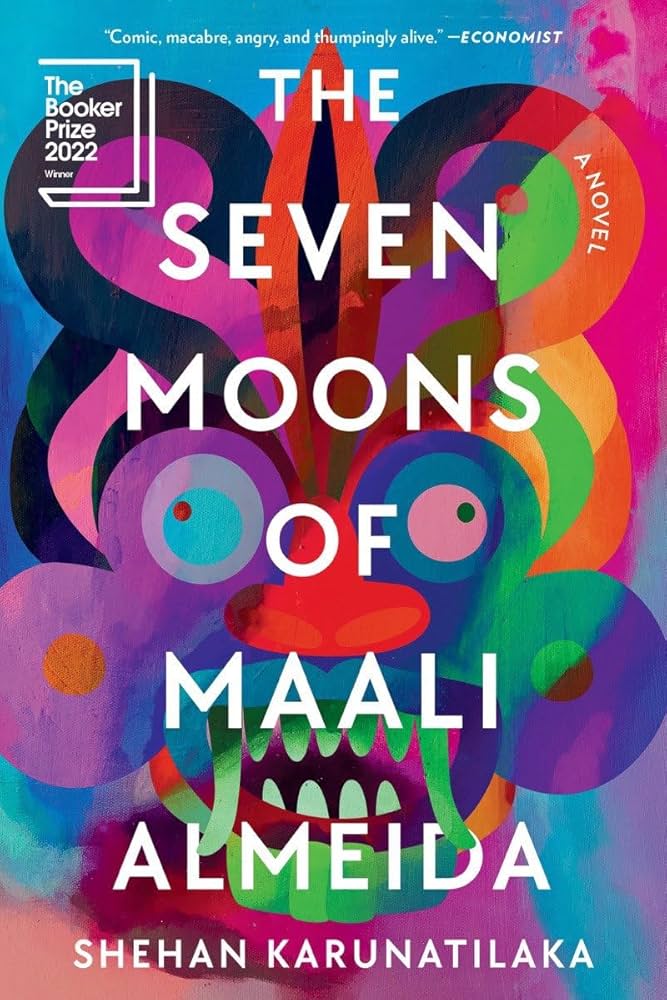
The Seven Moons of Maali Almeida

Maybe death isn’t all it’s cracked up to be.

Every soul is allowed seven moons to wander the In Between. To recall past lives. And then, to forget. They want you to forget. Because, when you forget, nothing changes.

This is an extraordinary book. It has been on my To-Be-Read list since 2022, when it won the Booker Prize. It is a book of ideas—profound ideas, comical ideas, terrifying ideas—all wrapped in the guise of a murder mystery that’s also a ghost story that’s also a satire on the human condition. Not surprising, it’s also a challenging read.

It takes place in Colombo in 1989, during the brutal Sri Lankan civil war. This is familiar Joseph Conrad territory (The Heart of Darkness) echoing humanity’s timeless lament, “The horror, the horror.” It’s rarely good guys vs. bad guys, just people doing terrible things to other people, and taking turns being victims.

Maali Almeida is a dead war photographer who can’t remember how he died or who killed him. He had taken photos of massacres, incriminating both sides, and now has seven moons (days) to solve the mystery of his murder and to guide the living to where he hid the photos.

He does this in the Bardo, the in-between state in Tibetan culture between life and death. It is a realm filled with grieving, vengeful, and vindictive spirits. Maali is led, sometimes misled, by guides—the immediately past dead, various spirits and demons. Time here is not linear; it turns back, leaps forward, twists in upon itself.

There’s a lot of humor, although a bleak, sardonic kind of humor: Maali encounters a drag queen who committed suicide. She explains, “I did it because I was sad. That’s what most of us are, you see. But I also did it because I was Buddhist. I thought reincarnation was cheaper than paying for a sex change.”

This book will probably be enjoyed most by those who remember their dreams, because it has the structure, logic, and feel of a dream, at once familiar and bizarre, surreal and revelatory. Like most magic realism, it’s a trip without drugs. Think Salman Rushdie’s Midnight’s Children or the works of Gabriel Garcia Márquez (One Hundred Years of Solitude).

Peppered throughout are tantalizing ideas, on history (“History is people with ships and weapons wiping out those who forgot to invent them”), on the soul and personal identity (“You are not the you that you think you are…You are everything you have thought and done and been and seen.”), on the perpetual and perpetuating religious conflicts (“Everyone should pray to Whoever [i.e., one generic name for the divine] Then no one gets offended.”)

And perhaps the most unsettling idea of all: that death is not final. That the horror doesn’t end with one’s dying.

This time, the pain swipes at your gullet, it chokes you as you remember things you had tried to forget. How scared you were on your first assignment for the army, how hurt you were when your father left, and how disappointed you were to wake up in hospital after overdosing. How much the twenty-nine-year-old you, the eleven-year-old you and the seventeen-year-old you would’ve hated each other. And how the dead you loathes them all.

 from The Seven Moons of Maali Almeida

Shehan Karunatilaka

W.W. Norton Company


This review first appeared in The Columbia River Reader (January 15, 2026.) Reprinted with permission.

Revisiting the Classics, Pt. 2: The Books We Love

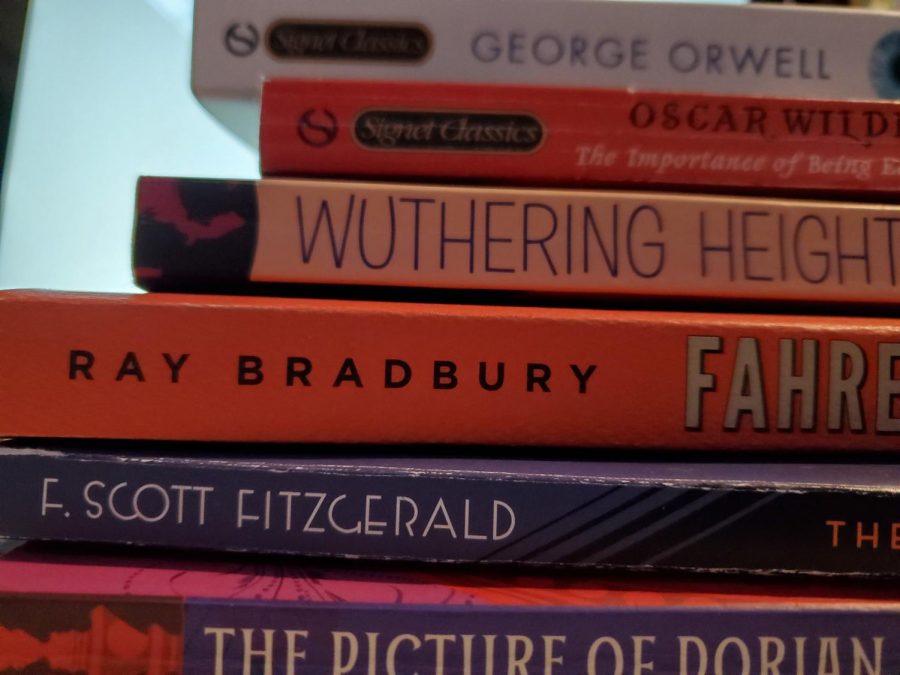
A classic is a book that has never stopped saying what it has to say. Written in a specific time, it remains relevant, speaking to each age anew in new ways. Last month, I called for favorite classics beloved by readers of this column, books that had struck a personal chord at a certain age, books that had been formative, maybe transformative, and that they would recommend to other readers.

Jan Bono (Long Beach) recommends Robert A. Heinlein’s Stranger in a Strange Land. “Possibly the first and last time I enjoyed a science fiction novel,” she writes. “It answered all my ‘meaning of life’ questions back then.” Heinlein’s classic made the same revelatory impact on me as a teenager. But the “meaning of life” questions kept changing.

Science fiction was also important to Fred Hudgin (Ariel) when he was a young man, especially Philip K. Dick’s Do Androids Dream of Electric Sheep?, inspiration for the classic 1982 film, “Blade Runner.” “I thought and dreamed about that book for years,” as he began writing his own science fiction, “hoping mine would someday be as good.”

Andre Stepankowsky (Longview) was deeply influenced by Henry David Thoreau’s Walden, both its lament that “most men live lives of quiet desperation," and its exhortation to live life deliberately.

The Good Earth first inspired Elaine Cockrell (Coal Creek Road) to read about China, and then all the other books written by Pearl Buck.

Turning to the East, Stewart Dall (Longview) recommends The Art of War by Sun Tzu, for its “profound simplicity” beyond its military application. It’s about so much more than war.

Mary Putka (Kalama) taught Harper Lee’s To Kill a Mockingbird to eighth graders for many years. It still remains her favorite, with the humane, noble Atticus Finch observing, “I think there’s just one kind of folks, folks.”

Dean Takko (Longview) didn’t read many classics until he was an adult, which he thinks is an advantage. “You can reflect on your own life experiences and understand the pain or happiness the character is experiencing.” Among his favorites are the short stories of Ernest Hemingway, especially “The Short Happy Life of Francis Macomber.”

What about Children’s Lit? Tiffany Dickinson (Longview) recommends Matilda by Roald Dahl. “It was one of the first books I'd ever read that made me laugh out loud (kid's books were always so SERIOUS). I loved Matilda's resilience and pep, that the villains get their due, and she lives happily ever after.” Husband Paul Dickinson read Flowers for Algernon by Daniel Keyes in eighth grade and counts it as a “kind of coming of age.” “It was the first time I started seeing things from the point of view of an adult”—and without happily-ever-after endings.

Ned Piper’s (Longview) favorite is Albert Camus’ existentialist novel, The Stranger, opening with the memorable line, “Mother died today…or was it yesterday?” When I first read the book in high school, I was perplexed and frustrated by its lack of moral clarity. It was unlike anything I had ever read before. I remain haunted still by its idea of the "benign indifference of the universe."

Although admitting that George Eliot’s Middlemarch is his all-time favorite, Hal Calbom (Seattle) recommends Body and Soul by Frank Conroy, a book which “over the years I’ve purchased for friends and perpetrated on people. It intertwines culture and music and urban life and childhood with a splendid tone and narrative drive.”

Some readers recommended lesser known works by favorite authors. Instead of The Catcher in the Rye, Portland writer Jeff Stookey recommends J.D. Salinger’s Nine Stories, which profoundly touched him as a teenager with its human pathos and introduced him to Eastern philosophy and mysticism, expanding his understanding of spirituality.

Instead of The Egg and I, Mary Stone (Castle Rock) recommends Betty MacDonald’s memoir of growing up in the Great Depression, Anybody Can Do Anything, which Mary found “refreshingly humorous,” and also helpful as she herself was learning to write.

Hermann Hesse is perhaps best known for the cult classic Siddhartha, but Ed Putka (Kalama) prefers Hesse’s masterpiece, The Glass Bead Game (also published as Magister Ludi), finding it “a brilliant examination of what constitutes a meaningful life.”

So, as bleak November slides us into winter, consider cuddling up with a classic, wrapped in your warm blanket, maybe accompanied by a cup of hot cider or glass of wine (or whiskey, if you’re reading Hemingway). Slow down time, taking a break from our frenetic TikTok existence with its Instagram attention spans. Turn off the TV, put away your phone, and settle in for a quiet evening with a companion who can transport you to a different time and place, perhaps even induce in you new and wondrous states of being.


This review first appeared in The Columbia River Reader (November 25, 2025.) Reprinted with permission.


Revisiting (and renewing) the classics

I’m always interested in what people are reading. Recently, a friend told me her book club had just finished My Antonia (1918). She had suggested it, remembering how much she enjoyed Willa Cather’s novel when she was younger. And I wondered: Why don’t we read the classics more?

Probably many of us were introduced to them too early. I’ve never fully recovered from having to read George Eliot’s The Mill on the Floss in eighth grade. Such assigned works came with an implicit message that they were supposed to be “good for you,” making them the literary equivalent of asparagus, broccoli, and other inedible foods in the young person’s mind. I suspect we weren’t ready for some of the books. We hadn’t lived enough, hadn’t experienced enough to appreciate them. (Middlemarch. Definitely, Middlemarch.)

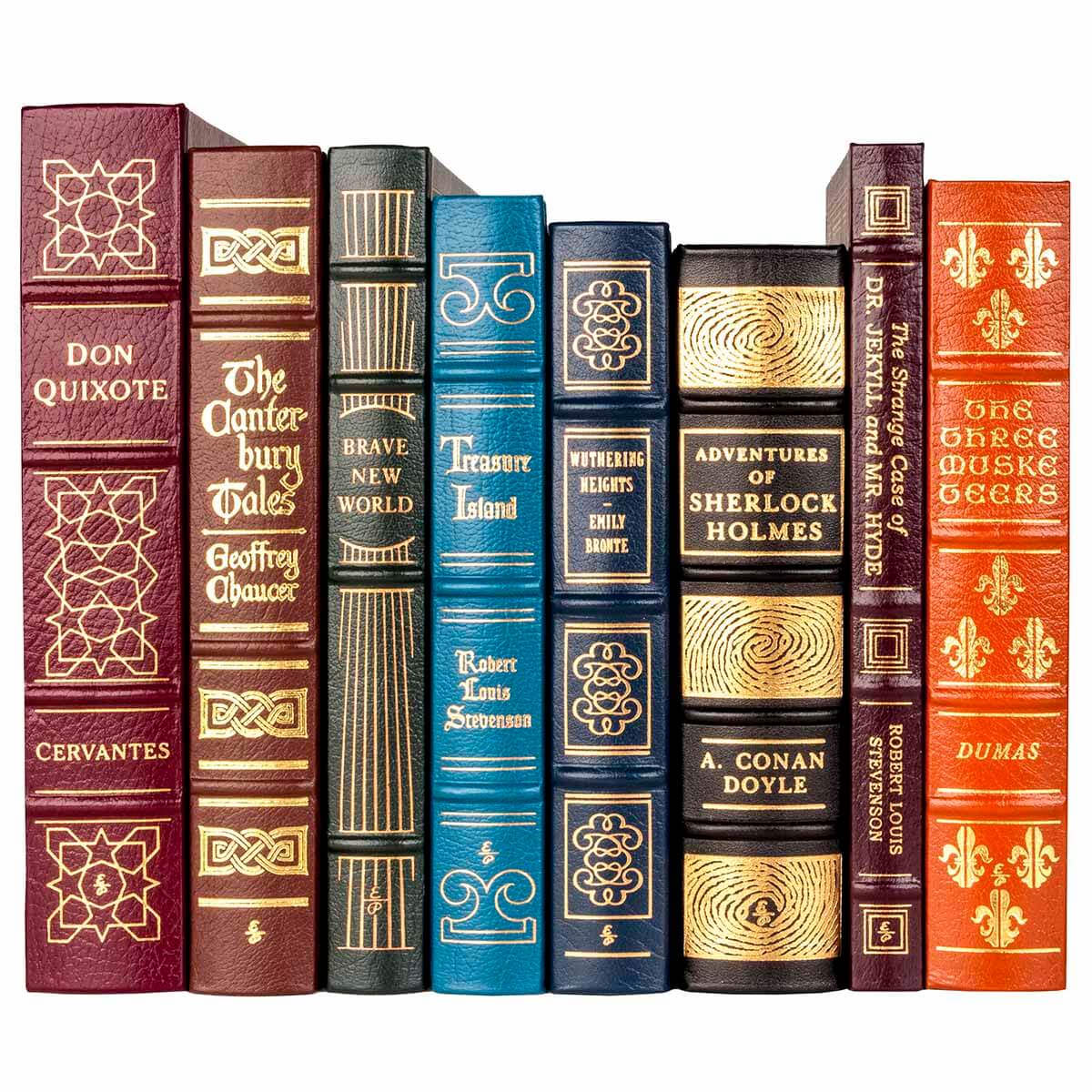
And yet, some persist in our memories, sentimental favorites—Treasure Island, Little Women, The Secret Garden, David Copperfield—like warm recollections of a childhood friendship.

Italo Calvino said, "A classic is a book that has never finished saying what it has to say." These are books that have stood the test of time. They speak to each new age, offering truths and insights into the human condition that continue to be relevant today. They are books that stay with us, long after we’ve finished them. In contrast, there is something ephemeral about contemporary fiction. Always has been—Fun activity for a rainy Sunday afternoon: Google the list of Pulitzer Prize-winning novels of the last hundred years. I’m betting you’ve never heard of most of them; very few are read today. And beware the book reviewer who proclaims some new novel “an instant classic.” Mmm, yeah, probably not.

Maybe it’s just me. After a summer of fun, frothy, easily forgettable beach reads, one craves something meatier. Like hungering for something more substantial after eating lots of cotton candy. In my novel, The Legacy of Emily Hargraves (yet to be declared a classic) the bibliophile Ashley recommends reading one classic each year. You don’t need to lead with the heavy hitters, Dostoevsky’s Crime and Punishment or Tolstoy’s War and Peace. Start with Jane Austen’s Pride and Prejudice. You may appreciate her sly, wry social commentary that you missed in high school.

Or like my friend, re-read (and maybe re-discover) a favorite from your childhood (Charlotte’s Web, Alice in Wonderland, The Lion, the Witch and the Wardrobe) or from when you were a teen (The Hobbit, The Count of Monte Cristo, Great Expectations.) If you liked Dickens, try his unfinished novel, The Mystery of Edwin Drood—I remember racing through that book to see how it doesn’t end—and then pick up Dan Simmons’ Drood (2009) which plays with the novel’s mysteries in the context of the great novelist’s final days.

Or try Adventures of Huckleberry Finn, then read Percival Everett’s James (2024), which tells Twain’s classic tale from the viewpoint of the enslaved Jim. Want something to steady and center you in these unsteady times? Try Marcus Aurelius’ Meditations. He was one of the great and few good Roman emperors, probably the closest humanity has come to a philosopher king. Feeling lusty? Try D.H. Lawrence’s Lady Chatterley’s Lover (1928). Somewhat tame by today’s standards, it was banned for obscenity and not published in the US until 1959.

Here’s an idea: Read classic works that were published one hundred years ago in 1925. For example, F. Scott Fitzgerald’s The Great Gatsby, then watch Baz Luhrmann’s lush film adaptation with Leonardo DiCaprio; or read Mrs. Dalloway, following it up with The Hours (1998), Michael Cunningham’s creative riff on Virginia Woolf’s ground-breaking novel.

Some works are definitely challenging. For my classic last year, I tackled Thomas Mann’s The Magic Mountain (1924). It's one of those great masterpieces of Western literature that everyone should read before they die, or die trying, or maybe die from trying. Consider it a chance to practice your skim-reflex, and it’s still less habit forming than most over-the-counter sleep aids.

For next year, you could consider works published in 1926: Hemingway’s The Sun Also Rises, Franz Kafka’s The Castle (Kafka seems increasingly relevant these days) or maybe  The Murder of Roger Ackroyd by Agatha Christie.

With each book, step into a different world and into a different age. You may need to adjust to a different pace, a different style of expression, a different sense of time—time is experienced differently when traveling in horse-drawn carriages than in cars. By doing this, you may also realize how many of today’s so-called historical TV dramas are really just modern sensibilities and attitudes dressed up in period costumes (I’m looking at you, “Bridgerton”!) Choose one classic and devote yourself to it, dig into it. Ask yourself: Why is this book considered a classic? Why have people continued to read it? What might it have to say about life in this 21st century?

Try it. It will be good for you.


This review first appeared in The Columbia River Reader (October 15, 2025.) Reprinted with permission.


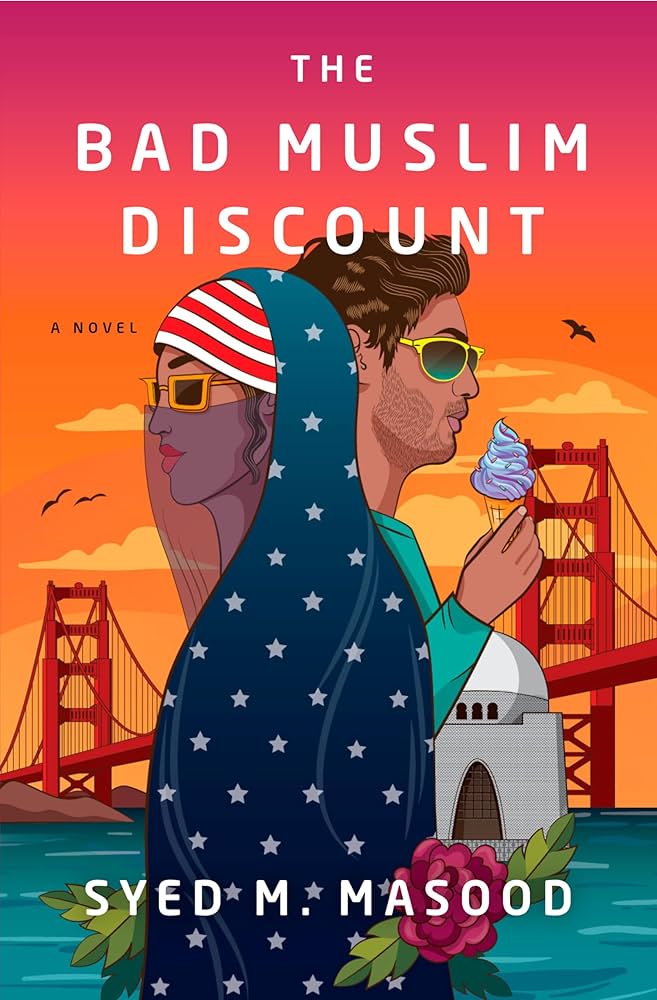
The Bad Muslim Discount


An immigrant story for our time.

We are a nation of immigrant stories, those family tales of how our ancestors came to this country from Ireland, or from Italy, from Mexico or Moldavia, from China, or Lagos or Laos. Each story is different, unique to a particular family and its origin culture. Yet there are similarities, too: these immigrants were usually driven by dreams and/or desperation. They experienced disorientation, needing to adapt to different customs, to a different language, often to different values, while also trying to hold on to their own cultural heritage.

The Bad Muslim Discount is a more recent immigrant story, a novel set in 2016, that is timely, touching, and poignant. It’s also very funny. Anvar, the son of Pakistani immigrants, has grown up and been educated in the US, and is now an attorney. A product of American and Pakistani cultures, he often finds himself suspended uncomfortably between the two. Irreverent and endlessly joking, he is frequently at odds with his family's traditional values and more somber outlook (he's the "bad Muslim" of the title).

Family and friends express concern that he is losing touch with his religion. “I’m just trying to make sure you don’t endanger your soul,” a friend tells him. Anvar replies, “Don’t worry about it. They made me give it up when I passed the bar.” His mother comments, “This one thinks he is funny…He’s the only one who thinks so.”

A second, more serious story is told by Safwa, a young Iraqi woman from war-torn Baghdad. She is living with her conservative father and abusive fiancé. For her, culture is a prison, and this new country may offer her an escape. But she lacks proper documents.

Anvar and Safwa’s stories also reflect the immigrant experience in 21st century America. A presidential campaign is underway where one of the candidates is stoking anti-immigrant, and particularly anti-Muslim, sentiment, as a way to boost his campaign and fire up his base. Safwa worries at the increasingly hate-filled rhetoric. But Anvar reassures her. He has lived here much of his life. He knows this country. This man will never be elected, he tells her. The American people are better than that. Ouch!

Throughout the book, Anvar struggles with his faith, in God and in humanity, eventually coming to an uneasy peace for his soul that allows him to proceed amid life’s many complexities and uncertainties—“I no longer believed that I believed, though I did have faith without knowing what I had faith in.”

That radical Islamists and “America First” nationalists had essentially the same worldview and the same desire to recapture a nostalgia-gilded past glory was proof, in my opinion, that God’s sense of irony was simply divine. Still, I wasn’t worried. The common sense and decency of my fellow Americans would never allow xenophobia and hatred to come to power.

       from The Bad Muslim Discount

Syed M. Masood
Anchor Books


This review first appeared in The Columbia River Reader (September 15, 2025.) Reprinted with permission.


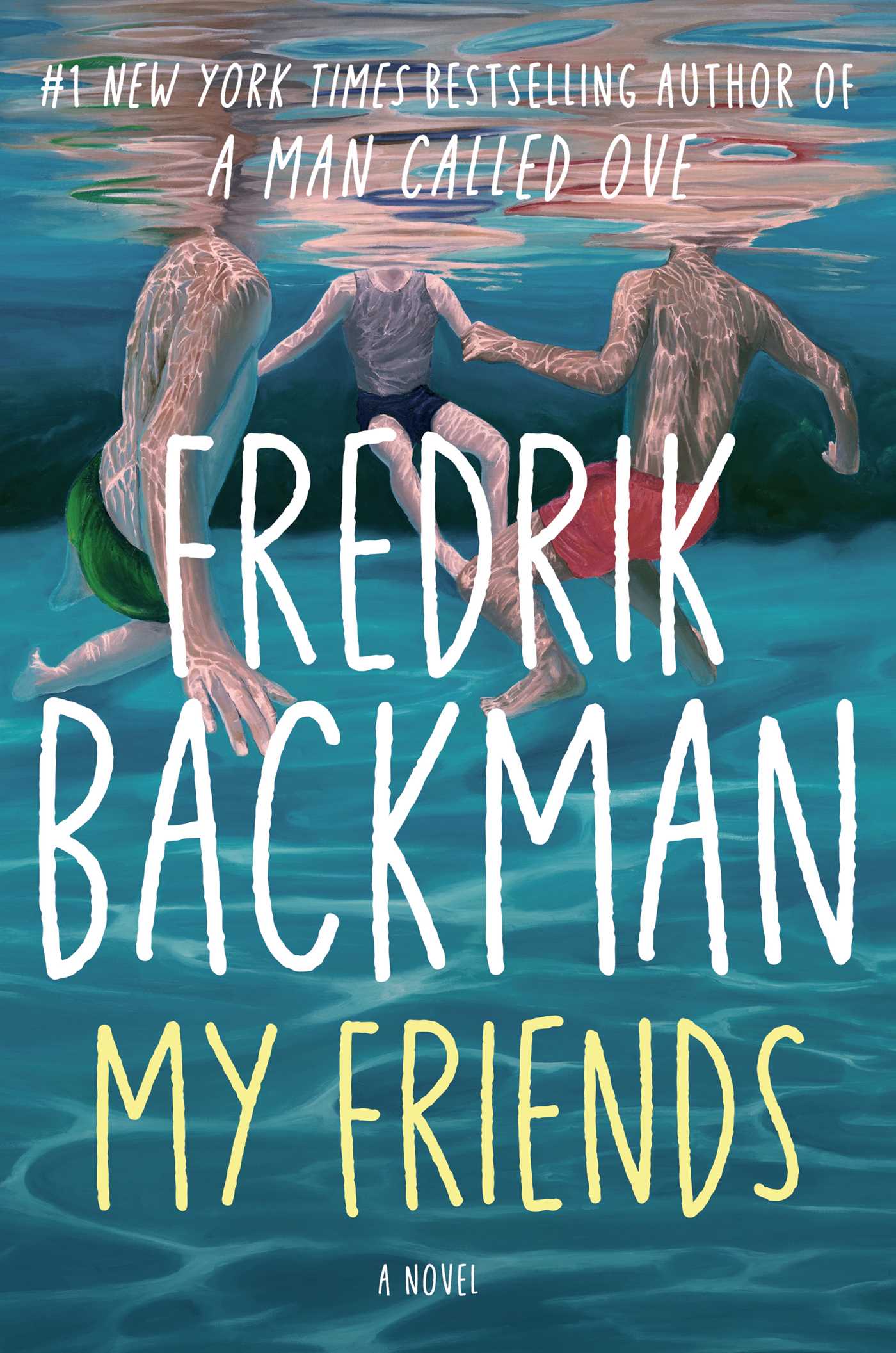
My Friends

These wild and precious lives.

The Swedish writer Fredrik Backman is the author of the international bestseller, A Man Called Ove (2012). His wry, dry Nordic humor is again on display in his latest novel, titled simply My Friends. It’s a celebration of the healing, redemptive qualities of art and friendship.

Louisa, an eighteen-year-old aspiring artist and social outcast, is fascinated by a world-famous painting—a picture of the sea with three young people sitting at the end of a long pier—and she seeks to learn the story behind it.

She meets Ted, one of the three teens in the painting who’s now an adult. As her grumpy guide, he slowly unwinds the tale of them and of their friend, “the artist,” who painted the picture. (Like Ove, Ted is one of those lovable curmudgeons Backman does so well). Louisa returns with him to the scene of the painting and learns what became of the four teenagers.

With homes defined by abuse, grief, and loss, their friendship was a refuge from the brutality and bleakness of their lives, when “they lay on the pier and drank cheap sodas and watched the sunset for free.” They were fourteen, a magical time of terrible jokes and silly adventures and fights bringing them close to not speaking to each other ever again, only to return the next day the best of friends.

At the heart of the story is the gifted and disturbed teen artist, his life both tormented and made transcendent by “art that is a joy so overwhelming you almost can’t bear it.”  (“There’s something very wrong with him, he wants to say, and the only time he doesn’t hate himself is when he’s painting…That’s the only time he ever feels like himself.” Perhaps not surprising, Backman writes in an afterword, “Telling stories is the only time I really like myself.”)

The novel has a timeless, fable-like quality. We don’t know where it takes place, or in what age—there are trains and cars, so it’s a modern setting—but it has a Once-upon-a-time feel to it. And as with all fables, there are little drops of wisdom dispensed along the way which help the characters (and the readers) make it through the often daunting and lonely experience of living.

One of these is the Mary Oliver poem, “The Summer Day,” which ends Tell me, what is it you plan to do/ with your one wild and precious life?

In this modern fable on art and friendship, Backman reminds us that, whatever our age, we have one wild and precious life, and asks “What do you plan to do with it?”

…children know hardly anything about their parents, even if they live with them their whole lives. Because all we know about them is as moms and dads, nothing about who they were before that. We never saw them young, when they still fantasized about all the things that could happen, instead of regretting all the things that never did.

                   from My Friends

Fredrik Backman
Atria Books


This review first appeared in The Columbia River Reader (August 15, 2025.) Reprinted with permission.


The Emperor of Gladness

Those who can’t remember their dreams

Ever since Ocean Vuong brought out his stunning debut novel, On Earth We’re Briefly Gorgeous (2019), many of us have been eagerly awaiting his next. It has arrived, and The Emperor of Gladness is very different. Where Gorgeous was slight, tight, and focused, a letter written by a young Vietnamese American man to his illiterate mother, Gladness is much longer and sprawling, almost montage-like in presenting a range of characters and their stories. Although an undercurrent of sadness runs through both books, the first had a sense of hope and promise. This new novel is almost unrelieved in its bleakness, its emotional tones painted with a palette of grays.

It’s set in the fictional East Gladness, a post-industrial blight in Connecticut, polluted and forgotten by the politicians and polluting corporations, and reflecting the characters’ lives (“everyone rushes past us…We are the blur in the windows of your trains and minivans, your Greyhounds.”) These are people who have become accustomed to living without hope.

Among them is Hai, a nineteen-year-old Vietnamese American, ashamed and drug-addicted, self-medicating to assuage the pain of living. He lets his mother believe he’s attending college, studying to become a doctor. Preparing to end his life, he meets the aging, slowly dementing Grazina Vitkus, and becomes her caregiver, living with her in her old, decrepit house. The pair bond, finding comfort in their mutual caring for the other.

To help support them, Hai gets a job at a franchise restaurant called HomeMarket (“We turn food into feeling, folks.”) To Hai, it “was not so much a restaurant as a giant microwave…‘made by hand’ meant heating up the contents of a bag of mushy food cooked nearly a year ago in a laboratory outside Des Moines and vacuum-sealed in industrial resin sacks.” The manager proudly boasts theirs is “the third-best-grossing HomeMarket in all twelve locations in the Northeast.”

Here again, Vuong, an award-winning poet, has some lovely images expressed in some beautiful language: In spring, the cherry blossoms don’t just blossom, they “foam” across the county, the soft rains “pebble” against the window, in the fall, the aspens are “coppering along the shores.” Kids from the nearby Catholic prep school come pouring in to the restaurant, “a sweatered sea of suppressed, unrepentant hormones.”

Ours has been called a second Gilded Age, with all the excess, inequality, and corruption of the 1890s. In every Gilded Age, there are the un-gilded, those barely getting by, whose lives are sustained by cigarettes, cheap booze and street drugs, or over-prescribed opiates, and this week’s lottery ticket. Vuong is giving expression to the forgotten in this current age of glitz, glut, greed and gloom, reminding us that for some—for increasingly many—the American Dream has gotten so far out of reach, they can no longer remember their own dreams. They no longer dream.

It’s a town where high school kids, having nowhere to go on Friday nights, park their stepfathers’ trucks in the unlit edges of the Walmart parking lot, drinking Smirnoff out of Poland Spring bottles and blasting Weezer and Lil Wayne until they look down one night to find a baby in their arms and realize they’re thirtysomething and the Walmart hasn’t changed except for its logo, brighter now, lending a bluish glow to their time-gaunt faces.

from The Emperor of Gladness

Ocean Vuong

Penguin Press


This review first appeared in The Columbia River Reader (July 15, 2025.) Reprinted with permission.


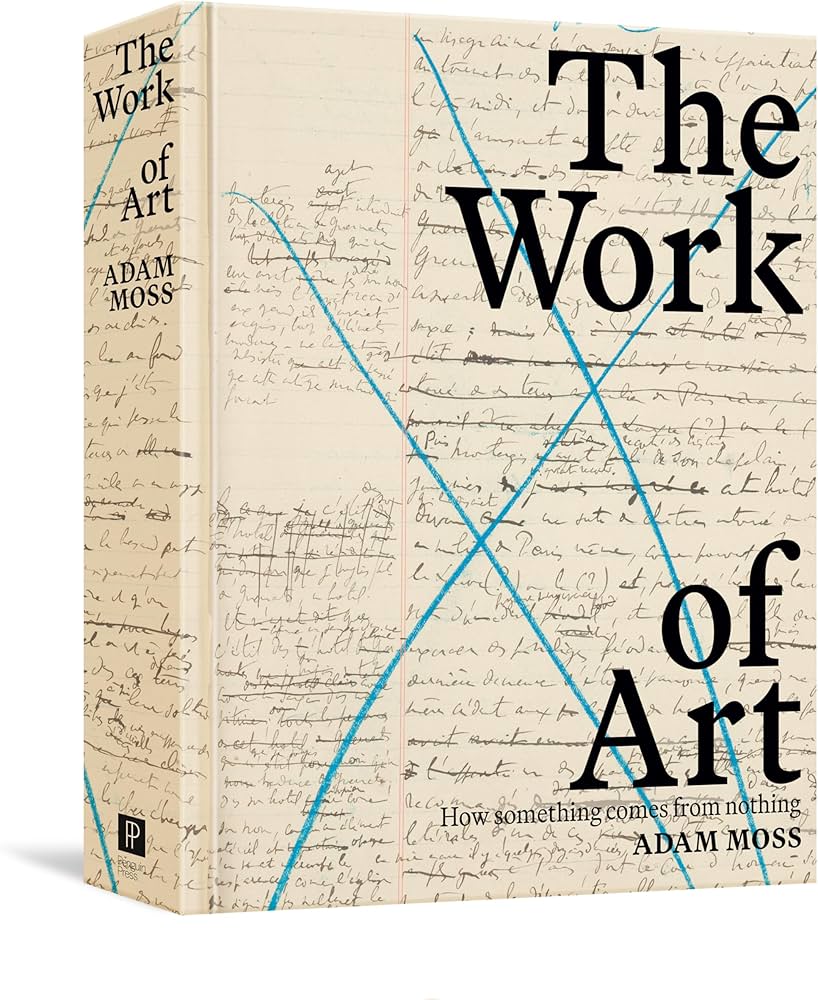
The Work of Art: How Something Comes from Nothing

Creativity: An Invitation to Play

Genius, for Thomas Alva Edison, was one percent inspiration and ninety-nine percent perspiration. Adam Moss, former editor of New York Magazine, comes to much the same conclusion in The Work of Art.

Moss interviewed more than 40 artists, including composer Stephen Sondheim, novelist Michael Cunningham (The Hours), playwright Tony Kushner (Angels in America), filmmaker Sofia Coppola (“Lost in Translation”), dancer/choreographer Twyla Tharp, “This American Life” host Ira Glass, as well as painters, sculptors, visual artists, chefs, cartoonists, and other highly creative people. Key for all of them is the intense experience of inspiration—an idea, an image, a musical phrase—but then begins the work.

Nobel laureate poet Louise Glück well articulates the agony and the ecstasy of the creative process. The ecstasy: “This engagement is as absorbing as nothing else I have ever in my life known,” she says. “The whole of the self is utterly engaged in something that seems more important than anything in the world.” She describes a natural high where the self is participating in something greater than the self and beyond the self, a sense that one is a co-creator with a mysterious partner who knows you better than you know yourself.

And the agony: Those moments of dormancy, of No-Flow, of being cut off from that creative partnership are for her “a torment,” usually turning her “despondent.” During such times, “I feel doomed,” she says. “But I don’t react to those feelings by trying to eliminate them through diligence or intelligence, because what’s needed is not diligence or intelligence. What’s needed is an intervention of something outside yourself, better than yourself, but with access to yourself.” Outside yourself? asks Moss. Sounds otherworldly. Yes, she admits, for her it is.

Like Glück, many of those interviewed understand the process to be more about listening and discovering than actual creating. “I don’t think I’m gifted,” said the painter Francis Bacon. “I just think I’m receptive.”

So, what to do during those down times, when the muse, or the spirit, or the subconscious isn’t communicating? “I just wait,” says Glück. “For me, the really hard thing about writing is how much patience you need to have.” She adds, “I mean you can will things, but whenever I’ve tried to do that, the poem just goes to hell. Becomes a contrivance. An arrangement made with a mind instead of a discovery.”

Creative writing teachers urge their students to “just get words down on paper.” But too often, without that creative connection, you’re left with only a bunch of inert words on the page. Glück advises, “If you want a discovery that will surprise you, too, you just have to wait.”

Surprise and discovery have always been part of the creative process. The Canadian writer Margaret Atwood likened it to being a magician pulling rabbits out of a hat. Art happening is “the extra rabbit coming out of the hat, the one you didn’t put there.”

The other message from Moss’ survey of artists is that, while we can’t control the 1 percent inspiration, we can decide to engage in the 99 percent of genius that’s perspiration. We can do the work of art.

For many artists, creativity is an act of play. Composer Brian Eno sees play as essential to learning and living fully, an activity that most of us lose as we grow older. He says children learn through play; adults play through art.

Anyone can make art, Moss argues—which is not the same as becoming a great artist, and anyway, that may be the wrong way to think about creativity and art. The cartoonist Lynda Barry notes how differently we think about art than about, say, riding a bicycle. “When we hop on a bicycle, no part of us thinks that we’ll be able to win the Tour de France, but with art, we think if we’re not really good at it, we can’t, or shouldn’t, do it.” Her point is we can still enjoy the bike ride, even if we’re not Lance Armstrong or Eddy Merckx. It’s the same with the process of creation. It’s the playing, the “engagement,” that’s important.

Moss is finally left with the mystery of the creative process. Maybe someday science will solve it, but until that time, the best we can manage is to explore the mystery ourselves by participating in it when lightning strikes, when the spirit moves us, when the opportunity arises, and let ourselves become engaged in something greater than ourselves.


We—all of us—get hit by lightning (inspiration) all the time, but the bolts are rarely remembered and seldom understood. We all dream. Artists don’t have more interesting dreams than the rest of us. They don’t own imagination. What they do seem to have is an unusual ability to cross over—to get entrance to that inarticulate place, and then to capture what they can make use of. All that listening, scrawling, sketching is their turning what they are grasping at, inchoately, into something they can act on.

             from The Work of Art

Adam Moss

Penguin Press


This review first appeared in The Columbia River Reader (June 15, 2025.) Reprinted with permission.


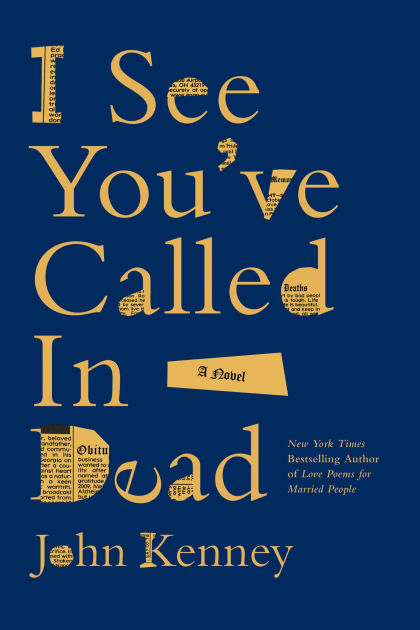
I See You've Called in Dead

Do-It-Yourself Obituary

Bud Stanley writes obituaries for a living. Forty-four, divorced and adrift, he’s living his life on automatic, coasting along without aim or purpose. The book opens with a work colleague setting Bud up on a blind date. The woman arrives. She’s attractive, smart, personable—and accompanied by her ex-boyfriend with whom she’s just reconciled. The date is not a great success.

Returning home, Bud begins drinking, and “in the muddled, whiskey-soaked place where terrible ideas pose as good ones,” he starts writing his own obituary: Bud Stanley, the first man to perform open-heart surgery on himself, died today in a hot-air balloon accident…Stanley was married anywhere from four to nine times. His ex-wives, all friends, praised his unique lovemaking technique, one they said could last upward to twenty-eight seconds. The obituary adds that he was a member of the Jamaican Bobsled Team, ninth in line to the British throne, and the inventor of toothpaste…You get the idea. This drunken exercise would have been innocent, good fun, had Bud not accidentally uploaded his obituary into the wire service system.

The next morning, he is promptly placed on leave, an administrative step prior to being fired. Howard, his boss, mentor and friend, tells him, “I don’t think anything matters to you anymore, Bud. And that kind of breaks my heart…You are an obituary writer who does not understand the first thing about life.” Reading this modern urban tale, I kept hearing the Beatles circa 1965: He's a real nowhere man/ Sitting in his nowhere land/ Making all his nowhere plans for nobody.

In a scene mirroring the “Department of Government Efficiency” (DOGE), Bud learns he can’t be fired because the system now has him listed as deceased.

“I’m sorry,” I said. “I’m a little confused. I’m not dead.”…

“For all intents and purposes, you are dead to the company. Which is why you have rights.”

“But if I were alive?”

“You’d be fired and we would end your COBRA due to negligence on your part.”

“So I’m better off dead?”

“Certainly in terms of health and dental, yes.”

I See You’ve Called in Dead begins as a funny, breezy beach read, but as Bud starts taking stock of his “nowhere life,” the story expands emotionally, prompting readers to examine how we live our own lives—or don’t. Through a series of incidents, he begins to understand that the measure of a life is not in the quantity of its years but in the quality of its moments. Or as the Stoic philosopher Seneca expressed it: Life, if lived well, is long enough. By the end, Bud is writing a very different obituary for himself.

Warning: Amid the many laughs, there will be tears.

What would you write if you had to write your obituary? Today, right now. What comes to mind? What memories, days, moments? What people and experiences? I realize, at first glance, that the idea of writing one’s own obituary while still alive may sound morbid. It’s not, though. I promise you. It’s a needed reminder of who you are, of what truly matters. Because it’s your life and there’s still time to write it. Before I have to.

from I See You’ve Called in Dead

John Kenney

Zibby Publishing


This review first appeared in The Columbia River Reader (May 15, 2025.) Reprinted with permission.


  1. Cosmic Connections: Poetry in the Age of Disenchantment
  2. Big Jim and the White Boy
  3. Playground
  4. The Secret History of Bigfoot: Field Notes on a North American Monster
  5. Imminent: Inside the Pentagon’s Hunt for UFOs
  6. The Reformatory
  7. The Bright Sword: A Novel of King Arthur
  8. The God of the Woods
  9. The Wide Wide Sea: Imperial Ambition, First Contact and the Fateful Final Voyage of Captain James Cook
  10. The Ministry of Time

Page 1 of 18

  • 1
  • 2
  • 3
  • 4
  • 5
  • 6
  • 7
  • 8
  • 9
  • 10

More:

  • 1000 Books to Read Before You Die
  • A Burning
  • A Little Life
  • A Shrug of the Shoulders
  • A Sudden Light
  • A Tale for the Time Being
  • A Visit from the Goon Squad
  • A Woman of No Importance: The Untold Story of the American Spy Who Helped Win World War II
  • A World Appears: A Journey into Consciousness
  • All the Light We Cannot See
  • An Immense World: How Animal Senses Reveal the Hidden Realms Around Us
  • Another Way the River Has: Taut True Tales from the Northwest
  • Anything Is Possible
  • Aristotle and Dante Discover the Secrets of the Universe
  • Astoria: John Jacob Astor and Thomas Jefferson's Lost Pacific Empire
  • Astrophysics for People in a Hurry
  • At the Existentialist Café: Freedom, Being, and Apricot Cocktails
  • Autobiography of Mark Twain
  • Behind the Beautiful Forevers: Life, Death and Hope in a Mumbai Undercity.
  • Between the World and Me
  • Big Jim and the White Boy
  • Big Magic: Creative Living Beyond Fear
  • Black Flags: The Rise of ISIS
  • Black Hills
  • Black Leopard, Red Wolf
  • Blurb Your Enthusiasm: An A-Z of Literary Persuasion
  • Call Me By Your Name
  • Capital in The Twenty-First Century
  • Cascadia's Fault: The Coming Earthquake and Tsunami That Could Devastate North America
  • Circe
  • City of Weird: 30 Other- worldly Portland Tales
  • Cloud Atlas
  • Cloud Cuckoo Land
  • Cosmic Connections: Poetry in the Age of Disenchantment
  • Dead Wake: The Last Crossing of the Lusitania
  • Deep Fire Rise
  • Deep River
  • Demon Copperhead
  • Don't Skip Out on Me
  • Dreyer’s English: An Utterly Correct Guide to Clarity and Style
  • Empire of Trees: America's Planned City and the Last Frontier
  • Everything That Rises: A Climate Change Memoir
  • Ex-Libris: 100+ Books to Read and Reread
  • Exhalation
  • Extremely Loud and Incredibly Close
  • Factfulness: Ten Reasons We’re Wrong About the World—and Why Things Are Better Than You Think
  • Fear Less: Poetry in Perilous Times 
  • Founding Partisans: Hamilton, Madison, Jefferson, Adams and the Brawling Birth of American Politics
  • Galway Kinnell Collected Poems
  • Gender Queer/Beyond Magenta
  • Gods of the Upper Air: How a Circle of Renegade Anthropologists Reinvented Race, Sex and Gender in the Twentieth Century.
  • Gone Girl
  • Hamnet
  • Hawking
  • His Bloody Project: Documents relating to the case of Roderick Macrae
  • Homo Deus: A Brief History of Tomorrow
  • Horizon
  • Hotel on the Corner of Bitter and Sweet
  • Huck Finn's America: Mark Twain and the Era that Shaped His Masterpiece
  • Humankind: A Hopeful History
  • I Am Not I
  • I See You've Called in Dead
  • Imminent: Inside the Pentagon’s Hunt for UFOs
  • In the Garden of Beasts
  • In the Houses of Their Dead: The Lincolns, the Booths, and the Spirits
  • James
  • JFK: Coming of Age in the American Century, 1917-1956
  • Killers of the Flower Moon: The Osage Murders and the Birth of the FBI
  • Landfall
  • Lean on Pete
  • Lessons
  • Lexicon
  • Life After Life
  • Life of Pi
  • Lincoln in the Bardo
  • Little Bee
  • Lost for Words
  • Mariposa Road
  • Mexican Gothic
  • Mink River
  • Mother's Daze
  • Murder and Scandal in Prohibition Portland
  • My Ex-Life
  • My Friends
  • No Ordinary Joes: The Extraordinary True Story of Four Submariners in War and Love and Life
  • No Time to Spare: Thinking About What Matters
  • On the Edge of Survival: A Shipwreck, a Raging Storm, and the Harrowing Alaskan Rescue that Became a Legend
  • One Long River of Song: Notes on Wonder
  • Orphan Train
  • Playground
  • Poetry Unbound: 50 Poems to Open Your World
  • Poverty, By America
  • Quiet: The Power of Introverts in a World That Can’t Stop Talking
  • Remarkably Bright Creatures
  • Revisiting (and renewing) the classics
  • Revisiting the Classics, Pt. 2: The Books We Love
  • River of the Gods: Genius, Courage, and Betrayal in the Search for the Source of the Nile
  • Short Nights of the Shadow Catcher: The Epic Life and Immortal Photographs of Edward Curtis
  • Sing, Unburied, Sing
  • Stamped From the Beginning
  • State of Wonder
  • Stones into Schools
  • Sun House
  • Ten Windows: How Great Poems Transform the World
  • The Age of Miracles
  • The Art of Memoir
  • The Bad Muslim Discount
  • The Bartender's Tale
  • The Better Angels of Our Nature: Why Violence Has Declined
  • The Boys in the Boat: Nine Americans and Their Epic Quest for Gold at the 1936 Berlin Olympics
  • The Bright Sword: A Novel of King Arthur
  • The Crying Tree
  • The Dawn of Everything: A New History of Humanity
  • The Elegance of the Hedgehog
  • The Emperor of Gladness
  • The End of Your Life Book Club
  • The Fate of the Day: The War for America, Fort Ticonderoga to Charleston, 1777-1780
  • The Fear Index
  • The Female Persuasion
  • The First Conspiracy: The Secret Plot to Kill George Washington
  • The God of the Woods
  • The Gods of Gotham
  • The Good Lord Bird
  • The Great Believers
  • The House in the Cerulean Sea
  • The Keeper of Lost Causes
  • The Lifeboat
  • The Light Between Oceans
  • The Little Red Chairs
  • The Map of Time
  • The Midnight Library
  • The Ministry for the Future
  • The Ministry of Time
  • The Narrow Road to the Deep North
  • The Nickel Boys
  • The Novel of the Century
  • The Oxford Illustrated History of the Book
  • The Reformatory
  • The Rejected Writers’ Book Club
  • The Republic for Which It Stands: The United States During Reconstruction and the Gilded Age, 1865-1896
  • The Rosie Project
  • The Round House
  • The Second Mountain: The Quest for a Moral Life
  • The Secret History of Bigfoot: Field Notes on a North American Monster
  • The Secret Place
  • The Sellout
  • The Seven Moons of Maali Almeida
  • The Sixth Extinction
  • The Socrates Express: In Search of Life Lessons from Dead Philosophers
  • The Splendid and the Vile: A Saga of Churchill, Family, and Defiance During the Blitz
  • The Storied Life of A. J. Fikry
  • The Sweetness of Water
  • The Thousand Autumns of Jacob de Zoet
  • The Trees
  • The Underground Railroad
  • The Unwinding: An Inner History of the New America
  • The Wager: A Tale of Shipwreck, Mutiny and Murder
  • The Wide Wide Sea: Imperial Ambition, First Contact and the Fateful Final Voyage of Captain James Cook
  • The Witches, Salem 1692
  • The Woman’s Hour: The Great Fight to Win the Vote
  • The Work of Art: How Something Comes from Nothing
  • The Writer's Library: The Authors You Love on the Books That Changed Their Lives
  • There, There
  • These Truths: A History of the United States
  • Tibetan Peach Pie: A True Account of an Imaginative Life
  • Time Travel: A History
  • Until We Fall
  • Walkaway
  • We the Animals
  • Where Bigfoot Walks: Crossing the Dark Divide
  • White Trash: The 400-Year Untold History of Class in America
  • Wild: From Lost to Found on the Pacific Crest Trail
  • Wolf Hall
  • Writers and Lovers
  • You Only Call When You’re in Trouble
  • Young Mungo
Subscribe to newsletter
  • About Alan
  • Wordfest
  • Book Chat
  • Book Reviews
  • Contact Info
  • Search alan-rose.com
  • Shop Note Cards
  • Log in
  • Foxglove Moments
  • Memories out of Season
  • A Writer's Journal
  • A Northman's Reveries
  • The Legacy of Emily Hargraves
  • Tales of Tokyo
  • The Unforgiven
  • As If Death Summoned
  • Other published Writings

© 2008 - 2026 ALAN-ROSE.COM                              Website by: LudCom.net       


  • Home
  • Published Work
    • Other Writings
    • As if Death Summoned
      • Trailer
      • Prologue and Chapter 1
      • Book Reviews
      • January 2021 WordFest Interview
      • Media Kit
      • Media Release
    • The Unforgiven
      • Trailer
      • Synopsis
      • Excerpts
      • Discussion Guide
    • Tales of Tokyo
      • Trailer
      • Synopsis
      • Excerpts
      • Bookchat Interview
      • Interview
      • Reviews
      • Prologue Reading
      • Discussion Guide
    • The Legacy of Emily Hargraves
      • Trailer
      • Synopsis
      • Excerpts
      • Reviews
      • Interview
    • The Island (to be published)
      • Author's Introduction
      • Prologue
      • Chapter 1
      • Chapter 2
      • Chapter 3
  • WordFest
  • Book Chat
  • Book Reviews
  • Note Cards
  • Reflections
    • Foxglove Moments
    • Memories Out of Season
    • A Writer's Journal
    • A Northman's Reveries
  • Email Alan
  • Newsletter